Planning a home with a view in the Hollywood Hills? Before you fall for a sleek concept or a big addition, know that hillside rules quietly shape what you can build, where you can build it, and how long it will take. If you understand the Baseline Hillside Ordinance and related standards, you can design smarter, budget better, and avoid costly surprises. This primer gives you the essentials so you can evaluate feasibility with confidence. Let’s dive in.
What the hillside rules are
The City of Los Angeles uses the Baseline Hillside Ordinance, often called the BHO, to manage development on steep terrain. It is meant to limit visual impact, protect slope stability, and reduce earthwork in mapped hillside areas that include much of the Hollywood Hills. Whether a lot is covered is a parcel‑by‑parcel determination through City mapping and zone checks.
City Planning sets hillside development standards and handles discretionary approvals. The Department of Building and Safety manages plan checks and grading/building permits. Expect project‑specific guidance to depend on your lot’s zone, size, slope, and any overlays.
How the BHO shapes design
Massing and height controls
The BHO aims to reduce visual bulk from streets and public views. It limits height and encourages “stepped” buildings that follow the slope. Designs that terrace and break up façades are more likely to fit within by‑right standards.
Floor area and FAR limits
Floor Area Ratio and related limits cap total interior square footage relative to lot size and slope. On smaller or steeper parcels, allowable interior area can be less than you expect. Multi‑level space may or may not count toward the total based on slope and whether lower levels qualify as subterranean.
Grading and earthwork
The City limits how much soil you can cut or fill and where you can do it. Larger grading volumes trigger stricter reviews, detailed engineering, and mitigation like retaining walls and enhanced drainage. Because earthwork is complex on hillsides, it can be a significant cost driver.
Slope bands and stepped siting
Different slope ranges on the same lot are treated differently. Steeper portions face tighter restrictions on structures and grading. This often guides where you place additions, pools, or garages, and it rewards designs that respect existing terraces.
Geotechnical requirements
Most hillside projects require a geotechnical report by a licensed engineer. The report evaluates hazards, recommends foundation types, and lays out drainage and retaining wall needs. The mitigation it recommends can materially affect feasibility and budget.
Environmental and discretionary review
If your project exceeds baseline standards or substantially alters the hillscape, it may need discretionary review and environmental review under CEQA. These processes add time, may require design changes, and can involve public notice and appeals.
Impact on common projects
Remodels and additions
Additions that increase floor area, change rooflines, or raise mass or height can trigger BHO review. Even interior work that adds a story or extends a roof can require plan checks for compliance. Early input from an architect familiar with LA hillside rules helps determine if your plan is by right or discretionary.
Pools and water features
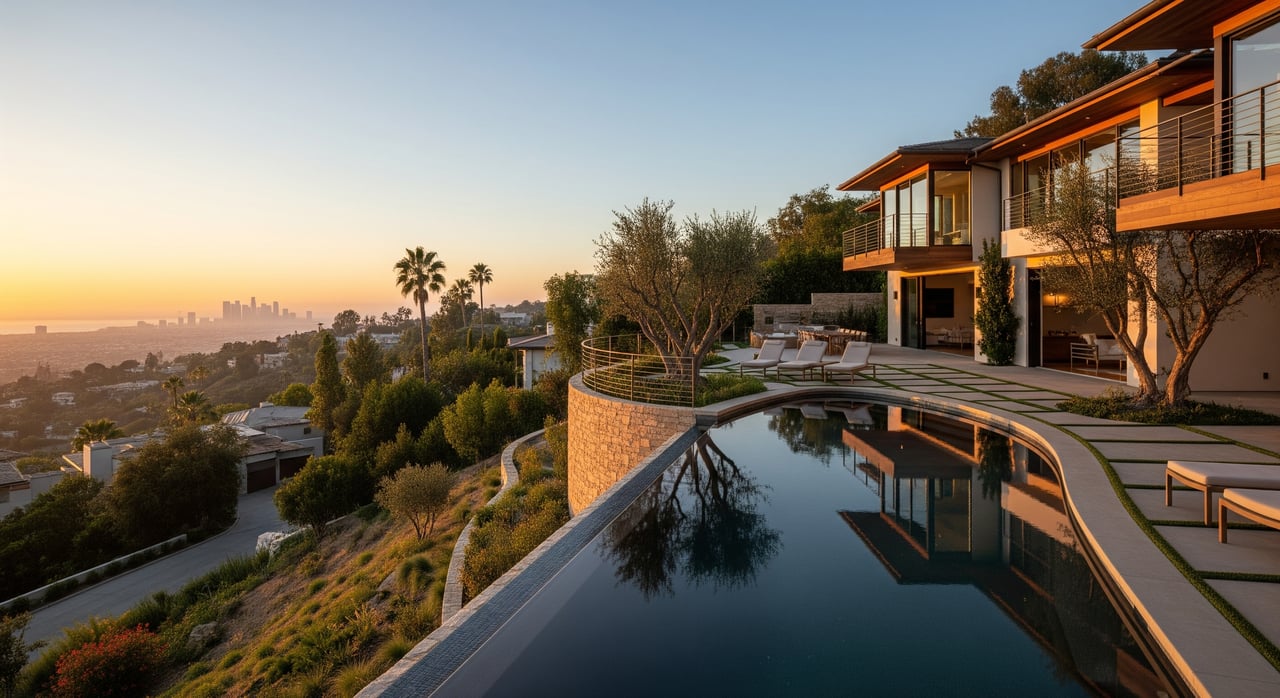
Pools often involve excavation, retaining walls, and engineered supports, which fall under grading limits. Siting a pool in a flatter part of the lot is typically easier. Pools near slope edges or on steep areas usually require more engineering and review.
Retaining walls and driveways
Retaining walls above certain heights need permits and engineered design. Long, highly visible walls can get more scrutiny. Driveways must meet City standards for grade and emergency access, so alignments and slopes matter from day one.
Buyer due‑diligence checklist
Set yourself up for a smooth process with early checks:
- Confirm if the parcel is within the City’s mapped hillside area and subject to the BHO.
- Gather existing permits, grading records, and any prior geotechnical reports from the seller.
- Commission a topographic survey and a preliminary site study by a local hillside architect and licensed geotechnical engineer.
- Verify zoning, lot size, hillside or open‑space overlays, and any specific plans that may apply.
- Review emergency access, hydrant spacing, and driveway standards, and confirm available utilities and potential upgrade needs.
- Ask about private restrictions such as HOAs, easements, or slope maintenance agreements.
- Budget for specialist consultants, including geotechnical, civil, structural, and landscape engineers, and an arborist if protected trees exist.
- Plan for time. Projects needing discretionary review, CEQA, or significant grading can add months to the schedule.
Costs, timeline, and risk
Costs to expect
Hillside work often carries higher per‑square‑foot costs than flat‑lot projects. Factors include complex foundations like piers or caissons, engineered retaining walls, and robust drainage. Also budget for technical studies and, if applicable, legal or appeal costs tied to discretionary review.
Timeline drivers
Allow time for geotechnical investigations, design iterations to meet hillside standards, and plan check cycles with City Planning and Building and Safety. Discretionary approvals can extend schedules from weeks to many months.
Common risks
Unanticipated subsurface conditions can increase foundation scope. Grading volumes may be larger than expected. Neighbor concerns during discretionary review can lead to redesigns or appeals. Fire access upgrades can also affect scope and budget.
Your project roadmap
A clear sequence helps you control risk and cost:
- Start with feasibility. Engage a hillside‑experienced architect and a licensed geotechnical engineer to review your lot’s topography and potential building footprints.
- Get a topo survey. Accurate contours inform grading limits, slope bands, and massing strategies.
- Shape a concept that steps with the slope. Favor terraced massing, lower rooflines, and reduced grading.
- Seek early City guidance. Confirm parcel applicability and discuss the likely path for by‑right vs. discretionary review.
- Develop engineering. Align foundation, retaining walls, and drainage with geotechnical recommendations.
- Prepare for plan check and, if needed, discretionary review. Build in time for comments, revisions, and any conditions of approval.
Best practices and pitfalls
Best practices
- Start with an early feasibility study and topographic survey.
- Minimize grading by using terraces and placing heavier elements on flatter portions of the site.
- Preserve natural drainage and vegetation to reduce visual and environmental impacts.
Pitfalls to avoid
- Assuming a straightforward rebuild without checking FAR, height, and grading limits.
- Underbudgeting for geotechnical mitigation and retaining walls.
- Ignoring fire access, hydrants, or driveway slope standards until late in design.
Bottom line for Hollywood Hills buyers
The Baseline Hillside Ordinance exists to protect the character and stability of hillside neighborhoods, and it directly shapes size, height, grading, and siting. Because rules are parcel‑specific, two similar homes on different lots can face very different paths. If you assemble the right team early and design to the hillside, you improve feasibility, control cost, and protect your timeline.
If you are weighing properties or planning a remodel, we can help you approach the opportunity with clarity and discretion. For tailored guidance on acquisition strategy and timing in the Hollywood Hills, connect with BZP Group.
FAQs
What is the Baseline Hillside Ordinance?
- It is Los Angeles’s framework for regulating size, height, grading, and siting in mapped hillside areas to limit visual and geotechnical impacts.
How do slope bands affect what I can build?
- Steeper parts of a lot face stricter limits, which can constrain structures and grading and influence where you place additions, pools, and garages.
Can I add a second story to a Hills home?
- Possibly, but additions that increase height or mass are reviewed under the BHO; feasibility depends on slope, lot configuration, and zoning.
Will a pool be allowed on my lot?
- Often yes, but pools on steep slopes or near edges typically require more engineering, retaining walls, and review than pools on flatter areas.
How long could the permitting process take?
- Timelines vary; plan for geotechnical studies, design iterations, and plan checks, with discretionary reviews adding weeks to many months.
Which experts should I hire first for a hillside project?
- Start with a hillside‑experienced architect and a licensed geotechnical engineer, then add civil, structural, and landscape engineers as needed.